Optimizing Dust Control: How Cyclone Collectors Keep Industrial Operations Clean and Efficient
In contrast to conventional filtration setups, cyclone dust collectors use motion rather than filter media to separate contaminants. That makes them a strong fit for operations handling high volumes of dust or coarse materials. Their construction cuts down on clogging, energy use, and frequent part changes while keeping airflow steady.
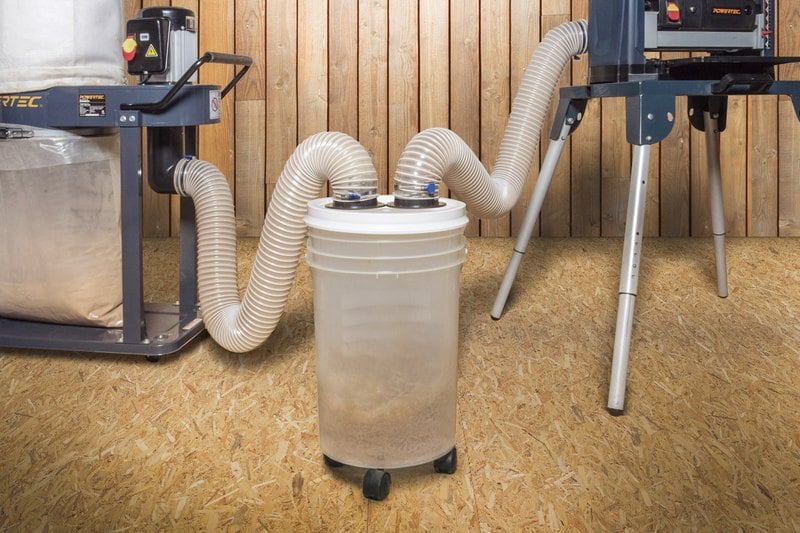
From woodworking and mining to cement production and metalworking, these collectors are key to maintaining cleaner, safer, and more productive industrial spaces.
What's Cyclone Dust Collector Technology
A cyclone dust collector pulls dusty air into a conical chamber and spins it at high speed. Centrifugal force pushes heavier particles outward, where they drop into a collection bin, while cleaner air leaves through a center outlet. That straightforward but effective mechanism has made cyclone systems a staple of industrial ventilation.
Performance depends on airflow velocity, cone shape, and particle size. Very fine particles may need multi-cyclone setups or secondary filters for full capture, but for coarse dust and heavy particulates, single-stage cyclones deliver excellent results with little upkeep.
Since there are no throwaway filters, cyclone collectors are both more sustainable and a good fit for operations looking to reduce long-term costs.
Key Benefits of Cyclone Dust Collectors
A major benefit is better air quality. By capturing large dust particles before they spread, these systems cut airborne hazards and make workplaces safer for employees. Cleaner air also helps downstream filters and ventilation equipment last longer.
Cost savings are another big plus. With no filter media to replace, maintenance costs drop significantly, and continuous operation means less downtime and higher plant productivity.
Cyclone collectors are also energy-efficient. Their aerodynamic design minimizes pressure loss, so less power is needed to move air, making them a sustainable and economical choice over time.
Applications Across Industries
Industries that generate unavoidable dust rely on cyclone collectors in many settings. Woodworking shops use them to capture sawdust and wood chips, keeping the air clear and lowering fire risk. Metalworking operations use them to manage grinding and cutting debris, protecting both machinery and personnel.
Cement plants and mines deploy these systems to handle heavy dust from crushing, conveying, and storage. Their rugged construction suits demanding environments where reliability and durability matter.
Agriculture and food processing also depend on cyclones to maintain hygiene and air quality by removing grain dust, flour particles, and other airborne residues.
Energy Efficiency and Environmental Impact
Industrial operators prioritize energy efficiency more than ever, and cyclone dust collectors deliver a clear benefit. Rather than relying on mechanical filtration, they use natural airflow dynamics, which cuts energy consumption. Many modern units include variable-speed fans that adjust airflow automatically for peak performance.
Because they avoid disposable filter elements, cyclone systems generate less environmental waste. That supports sustainability efforts focused on reducing landfill use and carbon emissions.
Investing in energy-efficient dust collection lets companies boost operational performance while showing a commitment to cleaner, more sustainable manufacturing.
Maintenance and Operation
Keeping a cyclone collector running is simple. Routine checks of the collection bin, cleaning the discharge area, and verifying fan performance are usually enough. With no filter cartridges to swap out, maintenance downtime stays low.
Correct airflow calibration keeps separation efficiency consistent. Over time, operators can adjust fan speeds and cone geometry to suit changing production needs, making the systems flexible and long-lasting.
With basic care and periodic inspections, these units can operate reliably for years, delivering steady dust control with very little attention.
Integration with Modern Manufacturing Systems
Modern cyclone collectors can connect to automated control systems for real-time performance monitoring. Sensors track pressure changes, airflow rates, and particle accumulation, enabling predictive maintenance and preventing unexpected downtime.
Some manufacturers combine cyclones with secondary HEPA or baghouse filters to achieve near-complete dust removal. This hybrid approach offers both high efficiency and low maintenance, which is ideal for facilities that must meet strict air quality rules.
Smart integration boosts performance and sustainability by ensuring energy is used efficiently throughout the entire air handling process.
Conclusion
Cyclone dust collectors remain one of the most dependable and economical air quality solutions for industrial settings. Their simple yet powerful design delivers consistent dust separation, lower maintenance demands, and lasting sustainability benefits.
They improve workplace air quality, extend equipment life, and reduce operating costs, making them a valuable investment for modern manufacturing. Whether used alone or as part of a larger filtration system, they continue to set the benchmark for efficient dust control.
As cleaner production becomes smarter business, adopting advanced cyclone technology is an important step toward safer, greener, and more efficient operations.