Boosting Manufacturing Efficiency with Industrial Mixing Agitators
In the fast-moving industrial world of today, investing in top-tier mixing technology can go a long way toward boosting productivity, cutting waste, and improving energy efficiency.
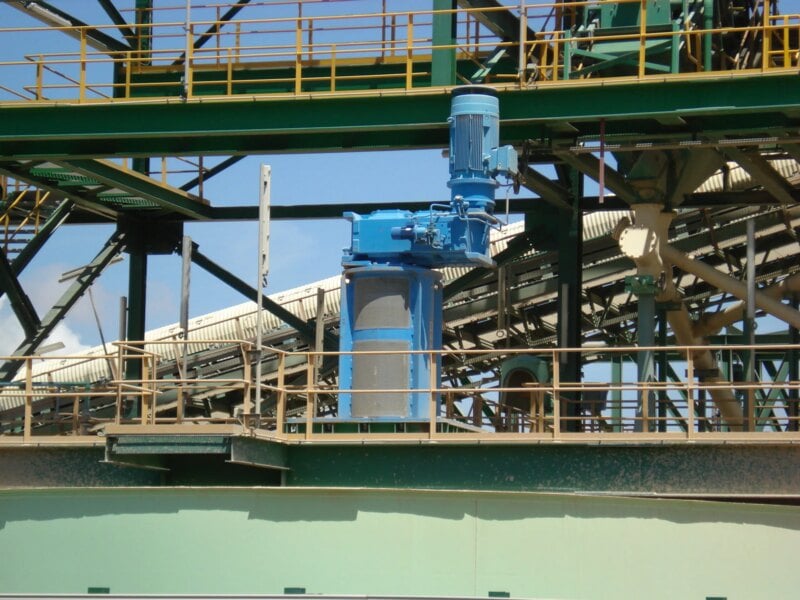
Understanding Industrial Agitators
An industrial agitator is, at its core, a motor-powered system designed to stir or circulate materials inside a tank or vessel. Its blades or impellers create motion, producing flow patterns that promote even distribution of components. The design choices depend on factors like viscosity, the type of material being handled, and specific production objectives.
Common configurations include paddle agitators for gentle mixing, turbine agitators for high-speed blending, and propeller agitators for continuous liquid circulation. Each design is built for a particular job, from keeping solids suspended to encouraging chemical reactions.
Modern design advances let operators manage mixing parameters through digital controls, delivering greater precision and repeatability. As a result, agitators have become more adaptable and more energy-efficient than in the past.
Key Benefits of Using Industrial Agitators
Consistency is one of the biggest gains that industrial agitators provide. When mixing is uniform, each production batch meets the same quality benchmarks, cutting down on variability and rework. That reliability matters most in fields like pharmaceuticals, where precision affects both safety and performance.
Energy efficiency is another significant benefit. Today's agitators are engineered to get the most from every unit of power, lowering operating expenses and environmental footprint alike. Many units rely on variable speed drives (VSDs) that automatically modify speed and torque based on the resistance of the material.
Faster processing is another payoff. By shortening blending and dispersion cycles, agitators help boost throughput without sacrificing quality, which makes them a key asset in highly competitive production settings.
Applications in Different Industries
Industrial agitators support a broad range of sectors, each with its own demands. In chemical plants, they make it possible to blend volatile compounds precisely and keep reaction vessels homogeneous. In food and beverage manufacturing, agitators help distribute ingredients evenly so taste and texture stay consistent.
In the pharmaceutical industry, they are essential for combining active ingredients with excipients, which ensures consistent dosing and product stability. Water treatment facilities also rely on agitators to mix purification and neutralization chemicals efficiently.
Every application gets an advantage from customized agitator designs, so mixing intensity and flow dynamics can be aligned with the material's properties and the process objectives.
Design Innovations and Technology Integration
Current industrial agitators come with advanced features aimed at improving both reliability and control. Digital sensors track torque, viscosity, and temperature in real time, enabling operators to make instant adjustments for peak performance. That intelligent feedback cycle reduces mistakes while boosting efficiency.
Modern agitator designs also put a premium on sanitation and ease of maintenance. In hygienic sectors such as food and pharmaceuticals, these systems typically include polished surfaces, quick-release seals, and CIP (Clean-in-Place) compatibility to stop contamination and make cleaning simpler.
Some manufacturers are also adding automation and AI-driven optimization, which makes predictive maintenance and self-adjusting mixing parameters possible. These technologies are helping redefine the future of process engineering.
Energy Efficiency and Sustainability
Energy use is still a central concern across industrial operations, and agitators are no exception. Manufacturers now build units that provide strong mixing performance while drawing less power. Improvements such as optimized impeller geometry, efficient motors, and advanced flow modeling all help reduce energy demand.
Newer designs are increasingly incorporating energy recovery systems and greener manufacturing principles, which further cut the carbon footprint of mixing operations. By reducing waste and pushing performance higher, these technologies help manufacturers meet sustainability targets.
Selecting an energy-efficient agitator does more than shrink environmental impact; it also delivers cost savings over the long term, making it a sensible investment for sustainable manufacturing.
Maintenance and Operational Best Practices
Routine maintenance is essential for keeping agitators performing at their best and extending their lifespan. Regular checks on bearing wear, impeller alignment, and seal integrity can prevent mechanical breakdowns and keep operations running smoothly.
Operators should also calibrate control systems on a regular basis and keep blades clear of residue. Good cleaning habits and proper lubrication not only extend service life but also prevent cross-contamination from one batch to the next.
Full operator training supports safe handling and helps get the most out of the equipment, while predictive maintenance systems can flag potential problems early and reduce unplanned downtime.
Conclusion
Industrial agitators are essential equipment that has changed the way materials are mixed, blended, and processed. Because they offer precision, dependability, and energy efficiency, they have become indispensable to manufacturers pursuing consistency and sustainability.
By grasping the technology, advantages, and upkeep needs, companies can make full use of agitators to improve quality and output while holding down operating costs. The addition of smart controls and automation further places these systems at the center of next-generation production.
From greater efficiency to stronger environmental performance, industrial agitators keep pushing innovation across industries — showing that well-controlled motion can produce powerful outcomes.