Boosting Accuracy and Throughput Through Ultrasonic Sieve Technology
Effective particle separation matters greatly in fields such as pharmaceuticals, food processing, and chemical manufacturing. Ultrasonic screeners have transformed the workflow by bringing accuracy, speed, and uniformity to material sorting. Through high-frequency oscillations, they stop mesh blockages and boost the movement of fine powders.
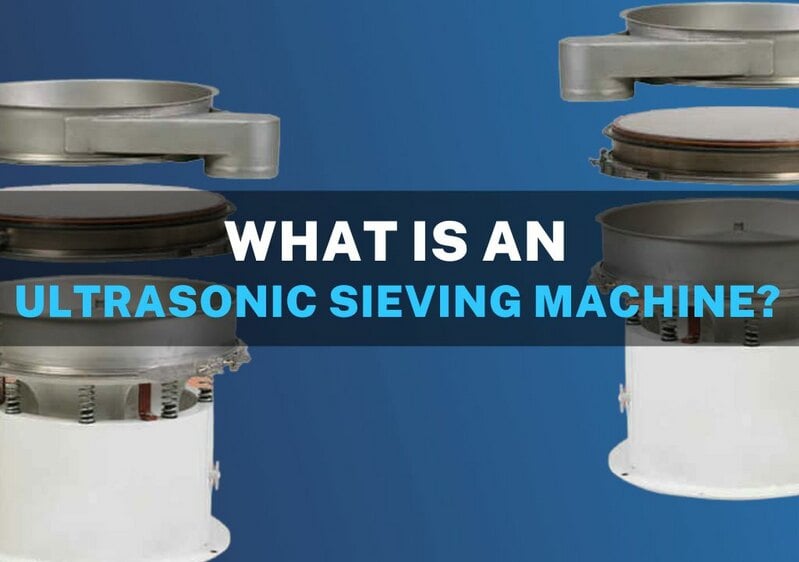
When measured against conventional screening, ultrasonic technology cuts idle time and sharpens precision, so each batch satisfies demanding quality requirements. It offers a contemporary fix for a long-standing production issue — balancing productivity with exactness.
Understanding Ultrasonic Sieving Technology
The core concept behind ultrasonic sieving is vibration energy transmission. A generator changes electrical energy into high-frequency mechanical vibrations that travel through the mesh. This motion keeps particles from sticking to the screen, allowing uninterrupted operation.
Traditional screens depend only on mechanical movement, but ultrasonic units generate micro-vibrations across the entire mesh. These vibrations disrupt static adhesion and let finer particles flow through more readily. The outcome is greater output and faster processing.
Today's ultrasonic sieves come with adjustable frequency options and digital controls, letting operators tailor operation to particle size, density, and moisture content — producing exact outcomes for many different substances.
Key Benefits of Ultrasonic Sieves
Greater accuracy ranks among the top benefits of ultrasonic sieving equipment. Steady vibrations sort particles with exactness, lowering product variability and waste. That matters especially in pharma and food sectors, where consistency is essential.
Less downtime is another key advantage. Since ultrasonic systems avoid mesh blockages, they cut cleaning needs and prolong the life of screen parts. That means lower upkeep expenses and continuous production.
Energy savings are also worth noting. Ultrasonic vibration uses less electricity than older high-speed mechanical agitation while still producing better outcomes. This makes the technology economical and eco-friendly.
Applications in Different Industries
These sieves have become crucial in many industries. In drug manufacturing, they support reliable powder granulation for tablets. In food operations, they keep flour, sugar, and spices consistent in particle size, protecting quality and texture.
Chemical and cosmetic plants rely on ultrasonic screening for tight control over pigments, polymers, and emulsions. In additive manufacturing and 3D printing, it guarantees that metal or plastic powders conform to strict quality and dimensional specifications.
Because this technology is so adaptable, it fits small lab experiments as well as large-scale factory output, allowing expansion without losing accuracy.
Enhancing Efficiency and Product Quality
By avoiding blockages and keeping flow steady, ultrasonic sieves shorten processing times considerably. Even vibration enables thorough material separation, producing purer batches and better product quality.
They also boost batch consistency by holding particle sizes uniform. That becomes critical in operations where tiny differences could affect a finished product's performance or stability.
In the end, the blend of exactness, speed, and minimal upkeep lets manufacturers reach higher output while satisfying stringent regulatory and quality demands.
Technological Innovation and Automation
Current ultrasonic sieves feature smart controls that track frequency, power draw, and operating stability in real time. Certain models offer automatic cleaning cycles and self-tuning settings to preserve maximum performance.
Connection to Industry 4.0 systems enables remote supervision and predictive upkeep, keeping results consistent from shift to shift. Such advances lower the risk of human mistakes and raise uptime in automated plants.
As digital controls and sensor tech keep improving, ultrasonic screening continues to move toward smarter and more responsive manufacturing systems.
Maintenance and Best Practices
Good upkeep lets ultrasonic sieves run efficiently for many years. Inspecting the mesh for damage, cleaning transducers regularly, and keeping electrical connections secure are all vital to peak operation.
Workers should stick to the maker's suggested cleaning guidelines, particularly with sticky or damp materials. Mild cleaning solutions and non-abrasive brushes help equipment endure longer.
Teaching staff the right operating and calibration steps improves precision and avoids frequent problems like overloading or misadjusted frequencies.
Conclusion
Ultrasonic sieving marks a significant step forward in industrial separation. It merges speed, exactness, and energy efficiency to produce impressive outcomes across many materials and sectors.
With less clogging, better particle management, and lower maintenance, these units help factories run cleaner and more efficiently. Their compatibility with automation makes them a strong fit for the coming wave of intelligent, sustainable plants.
In a time when quality and efficiency determine success, ultrasonic screening technology proves itself a dependable, high-performing answer to today's production challenges.