Unlock Game Design Skills: Shape Worlds With Your Imagination
You have the ability to build worlds that stay with players long after they set the controller down. Game design is the craft of turning imagination into interactive experiences—where creativity, logic, and storytelling come together. Learning these skills lets you shape digital realities that inspire, challenge, and entertain.
1. The Power of Imagination in Game Design
Every great game starts with imagination. It's the spark that turns a blank canvas into a vibrant world filled with adventure, mystery, and emotion. The most successful games don't just depend on flashy graphics or intricate mechanics—they begin with a vision.
Take Minecraft, for instance, a game where players construct entire universes out of simple blocks. Or Undertale, whose emotional narrative turns a straightforward RPG into something deeply personal. Journey shows how sparse dialogue and thoughtful design can stir powerful feelings through atmosphere and music.
Your imagination shapes how players connect with your world. It defines the tone, rules, and emotions that give gameplay its meaning. The more vivid and focused your creative vision, the more immersive and unforgettable your game becomes.
2. Core Principles Every Game Designer Should Know
While imagination fuels game design, solid structure brings it to life. To turn ideas into playable experiences, you need to grasp the essential principles of design.
One key concept is the gameplay loop—the repeating cycle of player actions and rewards. Whether it's gathering coins in Super Mario or constructing cities in SimCity, loops keep players hooked.
Next comes balance. A well-tuned game provides challenge without frustration. If the difficulty jumps too sharply or falls too flat, the experience loses its rhythm.
Player motivation is what fuels engagement. Every choice should make players feel empowered and rewarded for exploring or mastering the game. This idea of meaningful choice—where decisions carry real weight—builds emotional investment.
Finally, keep in mind the trio of mechanics, story, and aesthetics. When these work in harmony, gameplay feels smooth. A striking setting enhances the narrative, and well-designed mechanics bring purpose to the story.
3. Essential Skills for Aspiring Game Designers
To succeed as a game designer, you'll need a mix of creative, analytical, and technical talents.
Start with systems thinking—the knack for seeing how different parts of a game interact. Designers must predict how small tweaks to rules or physics can ripple through the whole experience.
Problem-solving is another must-have skill. You'll often run into design hurdles, like pacing issues, vague goals, or glitchy mechanics. Creativity helps you craft smart fixes that keep players engaged.
Collaboration is just as vital. Game development is a group effort involving programmers, artists, and writers. Clearly conveying your design vision ensures everyone shares the same picture.
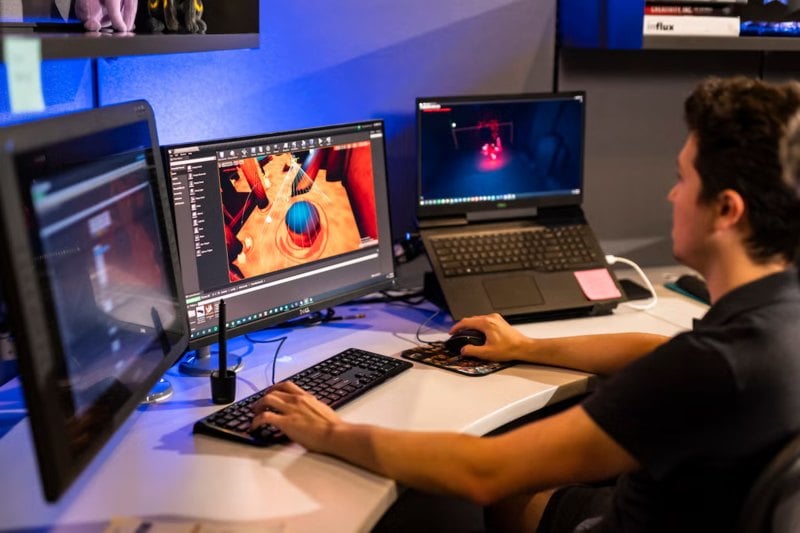
Finally, get comfortable with the tools of the trade. Explore Unity, Unreal Engine, or Godot. Try out level editors and visual scripting tools to see how concepts become playable experiences.
4. Learning Resources to Develop Game Design Skills
The web is packed with ways to learn game design—many of them free or budget-friendly.
Platforms like Coursera, Udemy, and GameDev.tv offer structured courses covering basics, storytelling, and programming. For hands-on practice, YouTube tutorials walk you through using engines and building prototypes step by step.
Community hubs such as itch.io and Reddit's r/gamedev let you share projects, get feedback, and team up on collaborations. Game jams, like those from Global Game Jam or Ludum Dare, push you to create full games in just days—a great way to learn under creative pressure.
If formal study appeals to you, many colleges now offer degrees or bootcamps in game design and development. But what really counts is your portfolio—proof of what you can build, no matter your educational background.
5. Designing Your First Game: From Concept to Prototype
Your first project doesn't need to be huge or complicated. Start small, but think carefully.
Begin with an idea that gets you excited. It might be a time-travel puzzle, a survival tale, or a basic platformer. Jot down what sets it apart—its core mechanic, emotional vibe, and visual style.
Next, create a prototype. Use simple placeholder art and focus on gameplay. Ask yourself: Is it fun? Does the player know what to do? Watch testers and take their feedback seriously. Players often catch flaws you'd miss on your own.
Then, polish your mechanics. Cut anything that confuses or annoys. Keep in mind, the best games aren't necessarily complex—they're coherent. When your idea and execution line up, even simple designs pack a punch.
6. Tools Every Game Designer Should Master
To bring your vision to life, you need to use the right tools effectively.
Game engines are the backbone. Unity is flexible and widely used for both 2D and 3D projects. Unreal Engine shines with high-end graphics and immersive worlds, while Godot is lightweight, open-source, and easy for newcomers.
For art and design, turn to Blender for 3D modeling and animation, or Photoshop and Krita for textures and concept art. Aseprite is a top pick for pixel art fans.
Audio tools like Audacity or FMOD help you layer in emotion and atmosphere.
For project management, platforms such as Trello, Notion, and GitHub make collaboration, version control, and task tracking easier—especially in team settings.
Getting good with these tools doesn't just simplify development—it frees you to express your creativity without technical roadblocks.
7. Building a Career in Game Design
Once you've nailed the basics, it's time to think about your path in the industry.
There are plenty of routes: you could become a level designer, gameplay designer, or narrative designer at an established studio, or go solo as an indie developer.
In AAA studios, designers focus on specific areas and work together on big projects. Indie developers, on the flip side, enjoy creative freedom but juggle many roles—from coding to marketing.
Your portfolio is your biggest asset. Fill it with finished prototypes, detailed design docs, and short gameplay clips that show your grasp of mechanics and design principles.
Networking matters too. Hit up game jams, conventions, and online gatherings to meet pros and potential teammates. The more your work gets seen, the better your odds of breaking through.
FAQ Section
1. Do I need to know how to code to become a game designer?
Not necessarily. Many designers focus on concepts, levels, and storytelling. Still, basic scripting knowledge helps you share ideas more clearly.
2. What's the best way to start learning game design?
Start by playing and analyzing games critically. Figure out what makes them fun, frustrating, or unique. Then, build small prototypes with free tools.
3. How do I build a strong game design portfolio?
Include a range of projects that highlight creativity, problem-solving, and care for player experience. Show your process, not just the end result.
4. Can one person make a complete game?
Yes, plenty of indie games are solo efforts. Start small, use free assets, and prioritize polished gameplay over size.
5. What mistakes should beginners avoid?
Steer clear of over-scoping projects, skipping playtesting, or focusing on visuals before mechanics. Simplicity and iteration are the keys to success.
Conclusion
Game design is where imagination meets structure, where creativity grows into living, breathing worlds. By mastering its principles and tools, you can craft experiences that entertain, inspire, and bring people together. Your imagination is your greatest strength—nurture it, sharpen your skills, and start shaping the worlds only you can bring to life.