How AI Is Changing Fantasy Art and Storytelling
AI is changing the way artists imagine mythical worlds and how writers spin stories full of magic, adventure, and heart. It’s not replacing creativity—it’s reshaping it, opening up a whole new chapter in fantasy art and storytelling.
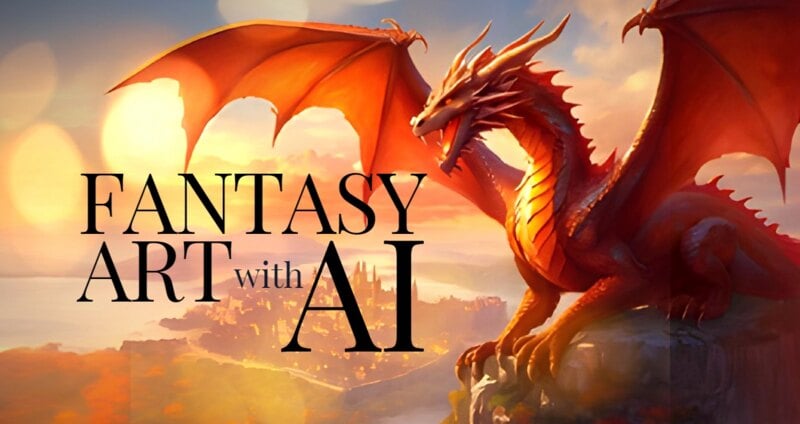
1. The Rise of AI in Creative Fantasy
Artificial intelligence has quietly been part of creative workflows for years, whether in photo-editing tools or music software. But it’s only recently that AI has started to take an active role in the creative process itself. Fantasy, as a genre, was quick to embrace this change. It’s built on invention—new creatures, realms, and magical systems—so when AI tools became able to picture or narrate nearly anything imaginable, artists and writers saw a huge opportunity.
Early experiments like AI Dungeon, which let players dive into AI-driven fantasy adventures, showed how machine learning could spark the imagination. Then came art platforms like Midjourney and DALL·E, which let creators turn simple text prompts into vivid visuals.
Today, independent creators are building entire fantasy universes, novels, and game assets with AI tools that cost a fraction of traditional production. This isn’t just a passing trend—it’s a full-blown creative shift.
2. How AI Transforms Fantasy Art
AI image generators have become a fresh kind of brush for digital artists. Tools like Midjourney, DALL·E 3, Leonardo AI, and KREA let users describe a scene in words—"a floating castle above a stormy sea, painted in golden twilight"—and get a polished piece of artwork in seconds.
For fantasy artists, that means the freedom to explore endless ideas quickly. They can run through dozens of variations on a single concept, testing different lighting, textures, and moods before locking in a final design.
A Practical Workflow Example
A fantasy illustrator designing a game character might start by:
-
Writing a detailed prompt: "A battle mage with obsidian armor, glowing blue eyes, and a staff of light."
-
Generating several options with Midjourney or Leonardo AI.
-
Refining a favorite result in Photoshop or Procreate with their own touches.
-
Using AI again to craft background scenes or extra elements that match the character's vibe.
The outcome is a teamwork-style process where AI handles the visual brainstorming and the artist shapes the final creative vision.
Debate and Perspective
Some critics say AI art lacks true originality, but others see it as a tool—much like a camera or paintbrush—that depends on human intent and style. In fantasy art, the emotional tone, symbolism, and composition still rest entirely on the artist's direction.
3. Reimagining Fantasy Storytelling with AI
AI is also changing how fantasy stories come to life. Writers are turning to large language models like ChatGPT, Sudowrite, and NovelAI to plan, draft, and polish their work.
AI as a Writing Partner
Rather than replacing authors, AI works alongside them, speeding up the idea-generation phase. For example:
-
You can ask AI to build world lore for your fantasy realm, including its history, myths, and social systems.
-
It can help come up with character names and backstories that fit your setting's culture.
-
AI can even draft sample dialogue or propose plot twists when you're stuck.
Interactive Storytelling
Platforms like AI Dungeon let players co-write their adventures with AI. Every choice a player makes—whether to fight, run, or negotiate—triggers AI-generated responses that shift the story in real time.
This kind of interactive storytelling points to the next step in fantasy fiction. Instead of just reading along, you become an active part of a story that evolves as you go.
4. The Human–AI Collaboration
At the core of every successful AI fantasy project is one simple truth: the human creator leads the vision.
AI can offer ideas and fill in gaps, but it doesn't feel emotion or grasp symbolism. That's why the strongest results come from creators who treat AI as a partner, not an author.
For instance, a writer might use AI to describe a magical forest, but it's their sense of tone, pacing, and character emotion that turns that description into a gripping scene. Likewise, an artist may lean on AI for visual inspiration, but the heart of the artwork comes from their own touch—the brushwork, color palette, and story woven into the details.
The blend of human creativity and AI efficiency creates a process that's faster, more experimental, and often more imaginative than going it alone.
5. The New Fantasy Ecosystem
AI has made creativity far more accessible. What once demanded professional gear and big budgets can now be done by anyone at home with a laptop and an idea.
-
Indie authors can put out entire book series with AI-generated concept art and covers.
-
Game developers can build worlds and NPCs using procedural AI tools.
-
Artists can explore freely without pricey software or big studios.
Communities on platforms like Discord, Reddit, and ArtStation have become gathering spots for AI fantasy collaboration. People share prompt templates, give feedback on each other's work, and push the boundaries of what AI can do together.
One notable trend is the growth of fan-driven AI projects—creators expanding on beloved universes like Tolkien's Middle-earth or George R. R. Martin's Westeros with AI-generated visuals. These projects don't replace the originals; they honor them through fresh takes.
6. Challenges and Ethical Questions
Like any major innovation, AI fantasy brings up important ethical issues.
1. Originality and Ownership:
Who owns an AI-made image or story—the user, the model developer, or the data behind it? Legal systems around the world are still working to catch up.
2. Data Training Ethics:
Some AI models are trained on copyrighted work without artists' consent. Newer tools like Adobe Firefly and Getty Images AI now rely on licensed datasets to keep things ethical.
3. Artistic Authenticity:
Critics worry that AI might flood the market with low-quality or derivative art. The counterargument: AI doesn't replace human artistry—it boosts it for those who use it thoughtfully.
To handle these issues, many creators follow a clear workflow: using AI for brainstorming, then layering in their own artistry and being open about their process.
7. The Future of Fantasy Creation
The next wave of fantasy art and storytelling will likely be built together by humans and AI. Here's what's coming:
-
Personalized Fantasy Experiences: Picture a fantasy novel that shifts its plot to match your tastes or mood.
-
AI + VR Integration: Step right into AI-crafted worlds through immersive virtual spaces.
-
Cross-Media Storytelling: AI linking art, story, and sound to create full cinematic universes.
-
New Creative Roles: Jobs like prompt designer, AI narrative engineer, and digital world curator will become common in creative fields.
AI won't wipe out traditional art—it will broaden it, mixing fantasy imagination with tech innovation to build richer, more dynamic creative worlds.
FAQ Section
Can AI art be considered original?
Yes, when guided by a human creator. The originality comes from how prompts, settings, and edits reflect individual creativity.
How do writers use AI without losing their voice?
Writers use AI for brainstorming or structure but always revise the output. The unique tone and emotional depth still come from the author.
What tools are best for fantasy creators?
For art: Midjourney, DALL·E, Leonardo AI. For writing: ChatGPT, Sudowrite, NovelAI. For games: InWorld AI, Scenario, Unity Muse.
Will AI replace traditional illustrators or authors?
No. AI speeds up the creative process but still depends on human judgment, taste, and storytelling instinct.
How can I start experimenting with AI fantasy tools?
Jump into Midjourney or Leonardo AI for art, and try ChatGPT or AI Dungeon for storytelling. Practice writing clear prompts and refining results to get better.
Conclusion
AI is turning fantasy art and storytelling into a new kind of creative teamwork. It gives artists, writers, and dreamers the power to bring worlds to life and craft tales with remarkable speed and accuracy. But the real magic still comes from people—that spark of imagination no machine can copy.
By learning to work with AI, today's creators can explore endless new corners of fantasy, turning once-impossible dreams into vivid, breathing works of art.