Beyond Restrictions: Inside the New Era of Free-Flowing AI Power
Right now, you're experiencing one of the most extraordinary technological shifts in history. Artificial intelligence, once shaped by limits and rigid programming, is moving into a fluid era of creativity, flexibility, and partnership.
1. The Evolution of Artificial Intelligence
Artificial intelligence started out as a vision of recreating human thought through logic and rules. Early systems in the 1950s and 1960s leaned heavily on symbolic AI—machines could follow commands but couldn’t really learn. They worked within narrow constraints, unable to extend beyond their original programming.
The turning point came with the emergence of machine learning in the 1980s and 1990s, giving computers the ability to detect patterns in data. Then deep learning arrived, relying on neural networks modeled after the brain. Once enormous datasets and powerful processors became common in the 2010s, AI could grasp context, interpret images, and produce text that felt genuinely human.
That journey—from programmed intelligence to learning intelligence—paved the way for today's most important breakthrough: free-flowing AI, a system that learns, adapts, and creates beyond fixed limits.
2. What "Free-Flowing AI" Really Means
Free-flowing AI marks a major departure from fixed, single-purpose systems toward adaptive, open-ended intelligence. Rather than simply doing what it was trained for, this type of AI can apply understanding to unfamiliar situations, produce original work, and react fluidly to complex requests.
In traditional AI, a model might sort images or forecast trends inside narrow categories. Free-flowing AI, however, can draft essays, compose music, create artwork, analyze data, and hold meaningful dialogue—all within one unified platform. This is achievable because of breakthroughs in large language models and multimodal systems that handle text, visuals, and audio together.
At its heart, free-flowing AI is built on adaptive creativity. It doesn’t merely repeat patterns; it learns from them, transforms them, and delivers results that even its creators find surprising.
3. Key Technologies Driving the New Era
Several technological advances have fueled the rise of this new AI era.
First, large language models (LLMs) such as GPT and Claude show how massive datasets and transformer architectures capture language nuance, context, and reasoning. These models rely on self-attention mechanisms to connect meaning across lengthy passages, enabling thoughtful responses that feel natural and coherent.
Second, diffusion models transformed generative art and design. By teaching AI to understand noise and patterns, these models turn text prompts into realistic images, 3D scenes, and videos, letting artists and engineers bring ideas into view instantly.
Third, reinforcement learning with human feedback (RLHF) lets AI improve its behavior through guided interaction, aligning its responses more closely with human preferences and ethical expectations. Paired with multimodal AI, which processes multiple kinds of data simultaneously, these technologies are building systems that see, reason, and communicate across formats—the way people do.
4. Applications Across Industries
Free-flowing AI isn’t some distant idea; it’s already transforming the way industries function.
In creative fields, AI tools produce artwork, music, and stories, giving people without technical training the power to turn their ideas into reality. Writers use AI for brainstorming, designers for concept exploration, and filmmakers for pre-visualization.
In healthcare, adaptive AI examines patient records, predicts health risks, and customizes treatment plans. It learns continuously from every case, steadily improving its accuracy and effectiveness.
In education, AI tutors adapt lessons to each student’s pace, offering personalized feedback and support. Learners around the globe now have access to high-quality education through intelligent systems that respond to their individual needs.
In business and research, AI supports data analysis, workflow automation, and new discoveries. It helps researchers test hypotheses more quickly, cuts down on repetitive tasks, and generates fresh insights by linking information that was previously unconnected.
Every industry touched by this technology feels the same shift: moving from automation to augmentation, where human creativity is strengthened rather than replaced.
5. Balancing Freedom with Responsibility
The potential of free-flowing AI comes with great promise—and great responsibility. As AI becomes more powerful, concerns about transparency, ethics, and control grow more pressing.
AI systems must be built with fairness and accountability in mind to guard against bias, misinformation, and misuse. Developers are increasingly adding explainability frameworks, making sure AI decisions can be understood and checked by humans. Global organizations and governments are now developing AI governance standards, including the European Union's AI Act, to oversee development and protect safety.
The goal isn’t to hold back innovation but to guide it thoughtfully. Free-flowing AI should uphold human values, not override them. Finding the right balance between creative freedom and ethical responsibility will determine whether this new era becomes a force for progress or division.
6. The Human-AI Collaboration Frontier
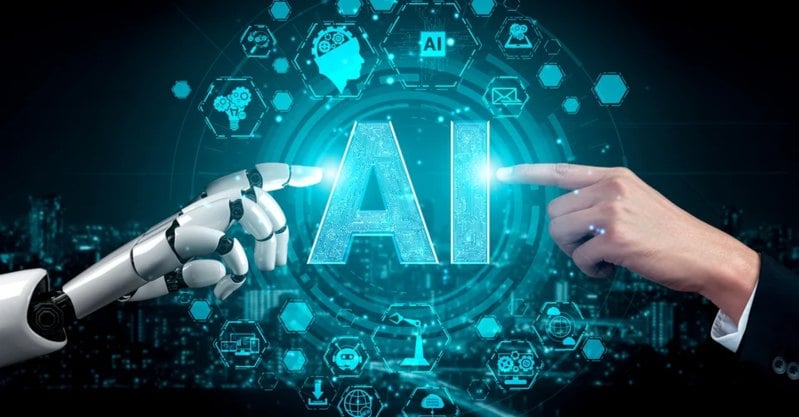
Free-flowing AI doesn’t replace people—it expands what they can accomplish. The idea of co-intelligence, with humans and machines working side by side, represents the next step in our evolution.
Designers use AI to build prototypes in hours instead of weeks. Scientists use AI to scan millions of research papers and uncover new molecules. Musicians use AI to explore melodies that human imagination alone might never discover. The trend is obvious: AI magnifies human capability.
The standout professionals of this era won’t be the ones competing with AI, but those who work alongside it, treating it as a creative and analytical partner.
7. Preparing for the Future of Free-Flowing AI
To succeed in this new environment, both individuals and organizations need to build adaptability. Knowing how to use AI tools effectively, recognizing their limits, and staying ethically aware have become essential skills.
Schools are starting to teach AI literacy, helping students understand how intelligent systems think and learn. Companies are weaving AI into their workflows not as a substitute for workers, but as a teammate that boosts performance.
In the years ahead, we may see self-improving AI systems that constantly refine themselves, autonomous creativity engines producing art and innovation, and integrated digital ecosystems where AI moves seamlessly across devices and platforms.
The aim isn’t simply smarter machines—it’s a more intelligent, imaginative, and connected world.
Conclusion
The new age of free-flowing AI brings together technology and creativity, logic and imagination. It pushes against the limits of what machines—and people—can do. By embracing this freedom with care, we can build a future where AI lifts us up instead of replacing us. The era of free-flowing intelligence has arrived, and it invites you to join its evolving story.