How to Create Online Passive Income Streams for Long-Term Financial Growth
Plenty of people are on the lookout for smarter ways to build financial security and enjoy more flexibility in their everyday routines. A popular route is earning passive income online. Through digital platforms, content creation, affiliate programs, online courses, and investment opportunities, individuals can set up income streams that may keep paying off even after the upfront work is done.
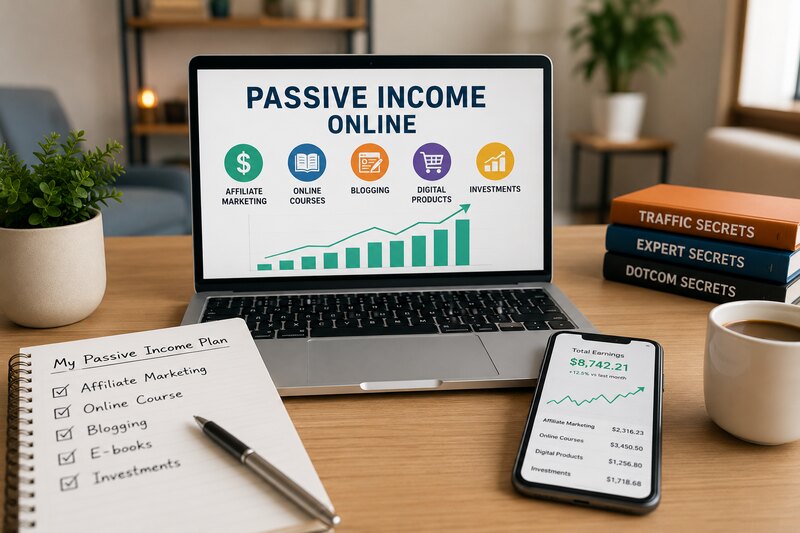
Earning passive income online doesn't mean money shows up with zero effort. Most successful ventures demand planning, setup, learning, and steady refinement at the start. But once a system is in place, it can keep generating revenue with far less day-to-day involvement than a typical job.
This approach holds strong appeal for those seeking more freedom. Instead of depending solely on active income like hourly pay or a salary, passive-income-online strategies let people build digital assets that can quietly work in the background over time.
Whether your interest lies in affiliate marketing, blogging, online courses, e-books, digital products, dividend stocks, real estate crowdfunding, or peer-to-peer lending, the trick is picking a method that fits your abilities, interests, budget, and long-term objectives.
Understanding Passive Income
Passive income is money earned from an asset, project, or system that doesn't demand constant daily effort. Classic examples include rental income, royalties, dividends, and business profits from a company where the owner isn't involved in day-to-day operations.
Online passive income follows the same idea, but the source is usually digital. Someone might start a blog, publish an e-book, develop an online course, promote affiliate products, or sell downloadable templates. Once the initial work wraps up, these digital assets can keep pulling in income as people buy, click, subscribe, or interact with the content.
The key difference between active and passive income comes down to how money is earned. With active income, you're typically trading time directly for cash. With passive income, you're building something that has the potential to pay off repeatedly, even when you're not actively working on it at that moment.
That said, passive income shouldn't be viewed as a get-rich-quick scheme. It often takes time to build trust, grow an audience, test offers, and fine-tune systems. The most realistic mindset is to treat passive income as a long-term project rather than a fast fix.
How to Make Passive Income Online
There are countless ways to earn passive income online. The best option depends on what you already know, what you enjoy, and how much time or money you're willing to put in upfront.
Some people lean toward content-based streams like blogging, YouTube, e-books, and online courses. Others prefer product-based options such as templates, printables, or digital downloads. Still others choose investment-based methods like dividend stocks, real estate crowdfunding, or peer-to-peer lending.
Before settling on a path, it's worth asking yourself a few key questions. What skills do you already have? What problems can you help solve for others? Do you enjoy writing, teaching, designing, investing, or marketing? How much time can you dedicate before the income stream turns profitable?
A solid passive-income-online strategy usually starts with one focused idea. Rather than juggling every method at once, it's smarter to build one income stream carefully, refine it, and then branch out later.
Affiliate Marketing for Beginners
Affiliate marketing ranks among the easiest ways to start earning passive income online. It works by promoting another company's product or service. When someone buys through your unique referral link, you earn a commission.
This method is a favorite among beginners because startup costs are typically low. You don't need to create your own product, manage inventory, handle shipping, or deal with customer service. Your main job is recommending useful products to the right audience.
Beginners can check out affiliate programs like Amazon Associates, ShareASale, Impact, CJ Affiliate, or direct partner programs from brands and software companies. The best affiliate products are usually those that fit your niche and offer genuine value to your audience.
For instance, a personal finance blog could recommend budgeting tools, investing books, savings apps, or financial education resources. A home office blog might promote desk accessories, productivity software, or online learning platforms.
Trust plays a huge role in affiliate marketing. If you push low-quality products just to earn commissions, readers may lose faith in your recommendations. A better approach is to honestly explain the benefits, drawbacks, and ideal users of each product.
Creating an Online Course
If you have expertise in a particular area, creating an online course can be a powerful passive income opportunity. Online courses let you teach a skill once and sell that training to countless students over time.
Courses can cover nearly any useful topic, including business, marketing, language learning, coding, photography, design, fitness, cooking, writing, personal finance, or career development. The most successful courses usually tackle a clear problem or help students reach a specific outcome.
Platforms such as Udemy, Teachable, Thinkific, and Skillshare make it simpler to publish and sell courses. Once the course is built, uploaded, and promoted, students can enroll without you needing to teach each lesson live.
However, creating a profitable course still takes work. You'll need to organize the material, record lessons, create supporting resources, write a compelling course description, and attract students. Over time, reviews, updates, and marketing can help the course keep generating income.
Blogging and Content Creation
Blogging is another solid way to build passive income online. A blog can draw visitors through search engines, social media, newsletters, and shared links. Once a blog sees regular traffic, it can be monetized through display ads, affiliate marketing, sponsored posts, digital products, or memberships.
The beauty of blogging is that one helpful article can keep bringing in visitors for a long stretch. For example, a guide on budgeting, travel planning, software tools, recipes, or product comparisons may continue attracting readers as long as people keep searching for that topic.
Content creation can also include YouTube videos, podcasts, newsletters, or social media pages. These platforms can support income through ads, sponsorships, affiliate links, paid subscriptions, or product sales.
The catch is consistency. A blog or content channel usually needs regular publishing before it becomes profitable. You have to understand your audience, pick useful topics, create valuable content, and refresh older posts when necessary.
Blogging and content creation work best for people who enjoy writing, teaching, researching, reviewing products, or sharing helpful ideas with an audience.
E-books and Digital Products
E-books and digital products are appealing passive income options because they can be created once and sold repeatedly. Unlike physical goods, they don't require inventory, packaging, or shipping.
An e-book might be a guide, workbook, tutorial, checklist, or short educational resource. Platforms like Amazon Kindle Direct Publishing let authors publish and sell e-books to a wide audience. Other platforms, such as Gumroad, Payhip, and Etsy, can be used to sell digital downloads directly.
Digital products can include templates, spreadsheets, planners, printables, design assets, stock photos, resumes, business forms, social media kits, and Notion templates. These products work well when they save the buyer time or help solve a specific problem.
For example, a freelancer might sell invoice templates. A personal finance creator could offer a budget tracker. A fitness creator might sell meal planners. A business consultant could sell proposal templates.
The key to selling digital products is usefulness. A product should be easy to grasp, visually clear, and practical for the buyer. Strong product images, clear descriptions, and customer reviews can also help boost sales.
Exploring Different Passive Income Streams
Diversifying income streams can help lower risk and boost long-term earning potential. If one source slows down, another may keep performing. But diversification should be handled thoughtfully. Trying to build too many income streams at once can lead to weak results.
A smart strategy is to start with one main method and then add related income streams later. For instance, a blog can later support affiliate marketing, an e-book, a course, and a newsletter. A YouTube channel can later promote digital products or sponsored partnerships.
| Passive Income Stream | How It Works | Best For |
|---|---|---|
| Affiliate Marketing | Earn commissions by promoting products or services | Bloggers, reviewers, and content creators |
| Online Courses | Sell educational lessons to students | Teachers, coaches, and experts |
| Blogging | Earn through ads, affiliate links, or digital products | Writers and niche website builders |
| E-books | Sell written guides or digital books | Writers, educators, and specialists |
| Digital Products | Sell templates, printables, or downloads | Designers, planners, and creators |
| Dividend Stocks | Earn payments from dividend-paying companies | Long-term investors |
| Real Estate Crowdfunding | Invest in property projects through online platforms | People interested in real estate exposure |
| Peer-to-Peer Lending | Lend money through online platforms and earn interest | Investors comfortable with lending risk |
Investment-Based Passive Income Options
Some passive income streams come from investing rather than creating content or digital products. These may include dividend stocks, real estate crowdfunding, and peer-to-peer lending.
Dividend stocks can provide income when companies distribute part of their earnings to shareholders. This can create a steady income stream, but dividends aren't guaranteed, and stock prices can go up or down.
Real estate crowdfunding platforms let individuals invest in property projects with less capital than buying a full property. This may give investors access to real estate income, but it can also involve platform fees, market risk, and limited liquidity.
Peer-to-peer lending platforms allow people to lend money to borrowers and potentially earn interest. However, there's a risk that borrowers may not repay, so this method deserves careful research.
Investment-based passive income can be valuable, but it requires caution. Before committing money, individuals should understand the risks, fees, timelines, and rules of each platform.
How to Choose the Right Passive-Income-Online Strategy
The right passive income strategy should align with your strengths and situation. Someone who enjoys writing may do well with blogging or e-books. Someone who enjoys teaching may prefer online courses. Someone with design skills might create templates or printables. Someone with investment knowledge could explore dividend stocks or crowdfunding.
It's also important to consider your available resources. Some methods require more time than money, while others demand more money than time. Blogging and affiliate marketing may have lower startup costs but require patience. Investing may need less daily effort but carries financial risk.
-
Start with one clear income stream instead of trying everything at once.
-
Choose a niche or topic you understand so your content or product feels trustworthy.
-
Focus on solving a real problem for a specific audience.
-
Build trust before monetizing heavily, especially with affiliate marketing.
-
Track performance so you know which efforts are producing results.
-
Improve your system over time instead of expecting instant success.
-
Understand risks carefully before using investment-based methods.
Common Mistakes to Avoid
One common mistake is expecting passive income to arrive quickly. Most income streams take time to build. A blog needs content and traffic. A course needs students and reviews. A digital product needs visibility and buyer trust.
Another mistake is copying random trends without understanding the audience. A product or website should serve a real need. If the offer doesn't help people, it'll be tough to earn consistently.
Some beginners also launch too many projects at once. This can split attention and slow progress. It's usually better to build one strong income stream first, then expand into others.
Ignoring marketing is another issue. Creating a course, e-book, or digital product is only part of the process. People have to be able to find it. Search engine optimization, social media, email marketing, partnerships, and paid promotion can all help boost visibility.
Conclusion
Passive-income-online opportunities can help individuals work toward financial growth and greater flexibility. Methods such as affiliate marketing, online courses, blogging, e-books, digital products, dividend stocks, real estate crowdfunding, and peer-to-peer lending all offer different ways to build income beyond active work.
The best approach depends on your skills, interests, time, and risk tolerance. Content-based methods may require consistent effort in the beginning, while investment-based options may require capital and careful research.
Passive income isn't a guaranteed shortcut to wealth, but it can become a valuable part of a broader financial strategy. With patience, planning, and steady improvement, online passive income streams can support long-term financial goals.
If you want to begin, start with one realistic method, build it carefully, and improve it step by step. Over time, even a small income stream can become a meaningful source of financial flexibility.