ELISA Kits Explained: How They Work and Why They're Essential for Research
Ever wondered how researchers spot minute quantities of proteins, hormones, or antibodies in a sample? The solution is often a robust lab tool called the ELISA kit. Standing for Enzyme-Linked Immunosorbent Assay, this method ranks among the most common approaches for biochemical analysis in both research and clinical settings.
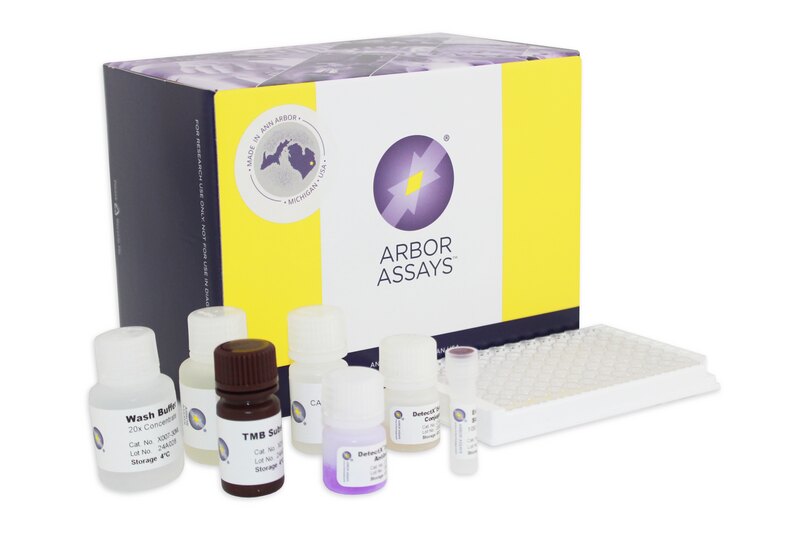
ELISA kits offer a fast, sensitive, and budget-friendly means of quantifying target molecules in blood, serum, cell cultures, and other biological specimens. Their applications are vast—ranging from tracking immune responses to spotting disease markers.
This guide walks you through how ELISA kits function, their varieties, essential parts, and tips for getting reliable results. Whether you're a lab novice or aiming to polish your testing skills, this article has all the essentials for mastering ELISA technology.
What Is an ELISA Kit?
An ELISA kit is a lab assay system that relies on antibodies and enzymes to identify specific biomolecules. It's built to detect and measure substances such as cytokines, hormones, or viral antigens in biological samples. The process hinges on antigen-antibody interaction, followed by an enzyme-driven reaction that yields a visible color shift.
Typically, ELISA kits arrive with pre-coated plates, detection antibodies, buffers, and substrate solutions. Every component is vital for maintaining sensitivity and accuracy. Since the assay is plate-based, it enables simultaneous testing of numerous samples under uniform conditions.
Scientists and medical professionals rely on ELISA kits to track health status, investigate immune reactions, and confirm experimental findings. Their adaptability makes them a vital resource in molecular biology, immunology, and diagnostic research.
Types of ELISA Methods
ELISA comes in various formats, each designed for specific experimental purposes. The primary types are direct, indirect, sandwich, and competitive ELISA. Despite all depending on antigen-antibody binding, they differ in detection methods and sensitivity levels.
Direct ELISA employs a single enzyme-labeled antibody to identify the target antigen — offering speed but reduced sensitivity. Indirect ELISA incorporates a secondary antibody to boost the signal, enhancing sensitivity. Sandwich ELISA, a widely used variant, relies on two antibodies to "capture" and "detect" the antigen, ensuring high specificity.
Competitive ELISA, on the other hand, determines antigen concentration by assessing the degree of inhibition between labeled and unlabeled antigens. Selecting the appropriate format depends on the sample type, target molecule, and required sensitivity.
How ELISA Kits Work
The ELISA procedure hinges on precise molecular interactions. Initially, the target antigen is immobilized on a microplate surface. Subsequently, antibodies that specifically bind to the antigen are introduced. These antibodies are conjugated to enzymes, which trigger a reaction generating a detectable signal, typically a color change measured via spectrophotometry.
Between each step, thorough washing is vital to eliminate unbound substances, guaranteeing precise results. After that, a substrate is added, which reacts with the enzyme to produce a colored signal. The color's strength is directly proportional to the amount of the target molecule present.
Automation has accelerated and stabilized this workflow, with contemporary microplate readers and software able to process hundreds of samples at once.
Applications of ELISA Kits
ELISA kits find extensive use in medicine, diagnostics, and research. Clinical labs often rely on them to identify infectious illnesses like HIV, hepatitis, and COVID-19 by spotting antibodies or antigens in patient specimens.
In research settings, ELISA is used to measure proteins such as cytokines, growth factors, and hormones. These measurements are key to understanding immune responses, disease pathways, and how well drugs work. Environmental scientists also employ ELISA kits to spot pollutants and allergens.
Thanks to their sensitivity and flexibility, ELISA kits stay essential for both everyday diagnostic work and advanced scientific investigations.
Optimizing ELISA Performance
Getting reliable and reproducible ELISA results demands careful attention. Be sure to stick to the kit's protocol and prepare all reagents correctly. Signal strength and background noise can be influenced by temperature, incubation duration, and how well you wash the plate.
To quantify results accurately, calibrating with standard curves is a must. Running samples in duplicate or triplicate and including both positive and negative controls confirms the assay is working properly. To avoid contamination, always use fresh pipette tips and sterile equipment throughout.
Finally, storing reagents properly—especially antibodies and substrates—helps prolong the kit's shelf life and ensures consistent performance across different experiments.
Common Troubleshooting Tips
Even seasoned researchers run into issues with ELISA kits. Typical problems include weak signals, high background, or inconsistent replicates. Weak signals might be due to expired reagents or not incubating long enough, whereas high background is often caused by insufficient washing.
If your readings are inconsistent, make sure you load samples evenly and that the microplate reader is properly calibrated. Checking for air bubbles, pipetting mistakes, or uneven plate coating can also fix many technical glitches.
Keeping detailed notes at every stage helps pinpoint where things go wrong and boosts the repeatability of later runs.
Advantages and Limitations of ELISA
ELISA comes with a host of benefits, such as strong sensitivity, scalability, and simplicity. It can pick up tiny amounts of biomolecules with impressive precision, which is why it's a go-to tool in labs across the globe. The plate-based format also enables high-throughput screening, cutting down on both time and expenses.
Still, ELISA has its downsides. It generally calls for pure reagents, and issues like cross-reactivity or contaminants in samples can skew results. Certain protocols also need exact timing and temperature management to keep performance steady.
Even with these hurdles, better antibody production and automation have turned ELISA into one of the most reliable and user-friendly methods in contemporary biology.
Final Thoughts
Grasping how ELISA kits function is key to succeeding in any biology or medical lab. Once you get the hang of the principles and fine-tune the workflow, you can produce precise, reproducible data that drive scientific breakthroughs.
Whether you're identifying illnesses, exploring cellular mechanisms, or quantifying protein levels, ELISA still stands as the benchmark technique for molecular detection. Its blend of ease and accuracy keeps it a fundamental pillar in lab research.
Through consistent practice and careful focus, you can unlock the complete power of ELISA methods and obtain dependable outcomes across all your experiments.