Learn More About Food Production Machinery and How Your Snacks Are Made
Think about a sunny field of corn or wheat swaying in the breeze. Those simple crops take a surprisingly long journey before they become the crackers, cereals, and treats sitting in pantries and lunchboxes. That transformation happens thanks to remarkable machines working quietly behind the scenes. The more you learn about food production equipment, the easier it is to see that every snack and every meal is a small marvel of modern engineering.
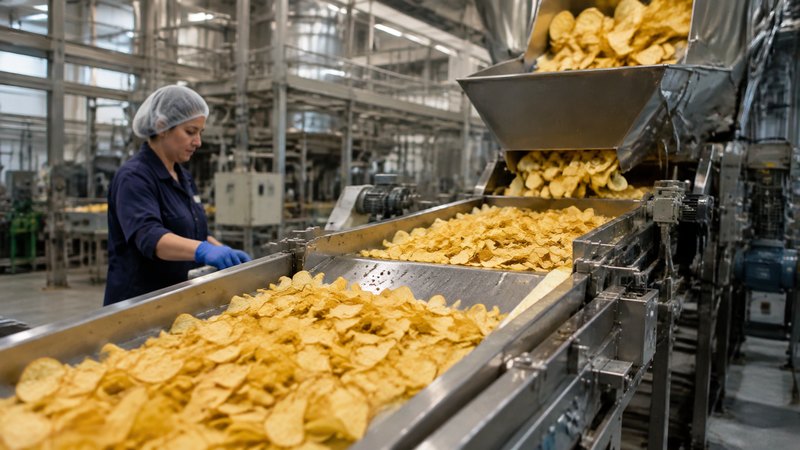
By 2026, food manufacturing has become faster, more precise, and smarter than ever before. Processing equipment now spans a vast array of systems designed to turn raw farm ingredients into the familiar products found on store shelves. Many of these machines are connected through automation, almost like a giant digital team coordinating every step. That linked technology helps keep the food supply steady and ready for a growing population.
Companies such as BAK Food Equipment provide the specialized machinery that lets manufacturers keep up with shifting consumer preferences. Shoppers today expect food that is safe, attractive, and carefully packaged. Because modern systems can measure and operate with incredible accuracy, they help reduce waste while ensuring each batch matches the quality of the last. From large conveying systems to advanced sensing devices, this equipment forms the backbone of today's food industry.
Long before a snack gets baked, flavored, or sealed into a bag, the ingredients must be made extremely clean. One of the earliest tasks in a plant is to guarantee that only high quality materials move forward. That means the machinery has to remove anything that shouldn't be there, preparing the ingredients for the sorting and washing steps that come next.
Separating the Best Ingredients with Weight and Smart Cameras
Before the foods we love reach the table, they go through an intense cleaning stage that can seem almost magical. Powerful machines act like giant filters, stripping away the unwanted bits that often come in from the field. This careful step helps ensure that every bite is not just delicious, but also safe for everyone at home.
One especially clever cleaning method relies on gravity itself. A Gravity Table Separator uses motion and airflow to tell a good seed apart from a dense pebble or other heavy material. As the machine vibrates, lighter pieces rise and move differently while heavier debris drops away. Companies such as Oliver Manufacturing have fine-tuned this approach so farmers and food processors can safeguard the purity of their harvests.
These separators are impressively accurate at catching materials that have no place in finished food. Because they focus on differences in density and weight, they can process enormous volumes every minute and remove specific troublemakers, including mud clumps, small stones, leftover stalks, broken kernels, and even grains weakened by mold or fungus.
While gravity handles weight, Machine Vision Sorting Systems inspect appearance. These tools work like tireless robotic eyes, using cameras to spot tiny flaws such as the wrong color, unusual marks, or shapes that seem off. When a defective piece is detected, the system instantly pushes it away from the main stream. Together, density sorting and visual inspection create a strong double check.
When these intelligent systems operate side by side, they can turn a rough bin of harvested material into a supply of clean, uniform ingredients. After impurities have been removed, the food often needs to be transformed in size or form, leading directly to the next stage of processing, where materials are either broken down or built up.
How Food Machines Break Down and Build Up Ingredients
Think about a fresh container of colorful play dough. You can crumble it into little bits with your fingers, or press it together to make tall shapes and fun designs. Food manufacturing equipment works in much the same way. Some machines spend their time reducing ingredients into smaller particles, while others shape and expand them into the interesting forms we recognize in store aisles.
In food engineering, this is a two sided process. Many people imagine processing as nothing more than cutting, chopping, or grinding, but the truth is broader than that. The industry depends on two opposite actions that are equally important when it comes to creating the right texture, structure, and eating experience.
That is why food production uses both size reduction operations, such as crushing and milling, and size enlargement operations, including extrusion and agglomeration. Each approach serves a different purpose, yet both are essential if manufacturers want the final product to look right, cook properly, and feel consistent from one bite to the next.
When ingredients need to be made smaller, engineers often rely on rugged equipment like Jaw Crushers and other heavy duty reduction tools. These machines are excellent at turning hard or coarse materials into finer, more manageable pieces. Whether the goal is flour for bread, a powder for seasoning, or a base for a silky sauce, size reduction helps create the uniformity needed for dependable results.
The opposite process can be just as fascinating. Twin-Screw Extruders are especially valuable when manufacturers want to create larger, shaped products from soft doughs or blended pastes. By forcing material through specially designed openings while applying pressure and heat, these machines can form cereal rings, twisted pasta, puffed snacks, and many other textures. In 2026, they remain central to building the crunch, shape, and structure that make modern foods so enjoyable.
After ingredients have been resized and reshaped, the work is not over. The newly formed materials still need to be blended with precision so that flavor, texture, and consistency stay the same throughout the entire batch. That makes the next step just as important as the shaping stage itself.
Blending Ingredients So Every Bite Tastes the Same
Have you ever poured oil and water into a jar and shaken it with all your might, only to watch the mixture split apart again? In a food factory, that kind of separation would leave dressings, sauces, and creams looking uneven and unappetizing. Fortunately, specialized mixing equipment works behind the scenes to keep products smooth, stable, and evenly combined.
High Shear Mixers are among the most important tools for this job. They operate at very high speeds, breaking ingredients into tiny droplets and dispersing them throughout the mixture. This produces homogenization, a process that makes the product uniform from top to bottom. When food is properly homogenized, cream stays velvety, dressings remain blended, and sauces hold their texture instead of splitting apart during storage.
Not every recipe calls for such aggressive mixing, however. Some foods are thick, heavy, or delicate enough that they need a gentler approach. In those situations, engineers may choose Anchor Mixers, which use broad, anchor shaped blades that sweep close to the walls of the vessel. They are ideal for moving dense batters or syrups while spreading heat evenly and reducing the chance of sticking or damaging the product.
Each mixer has its own specialty. High Shear Mixers are often favored for creams and salad dressings because they deliver strong homogenization. Anchor Mixers are better suited to heavy batters and thick syrups because they promote even heating and help prevent buildup on the tank surface. Twin-Screw Extruders can also contribute here, since they combine blending with forming when making cereals and snack products.
By selecting the right machine for the right texture, food manufacturers can make sure every serving tastes like the one before it. The goal is balance, using exactly the amount of force needed to unite different ingredients into a single, delicious result without overworking the mixture.
Once the food has been mixed and prepared, it must move through the facility quickly and hygienically without unnecessary human contact. That transportation stage helps keep products clean while guiding them toward the final step of packing and sealing.
Moving Food Through the Plant with Speed and Protection
Imagine the factory floor as a busy city where every snack needs a smooth trip to its next stop. Instead of cars on roads, food plants use conveyor systems that act as dedicated highways for ingredients and finished products. Belts, rollers, and automated transfer points carry materials from one station to another with impressive speed and control, helping prevent spills, delays, or damage along the way.
One of the greatest advantages of these automated routes is the safety they provide. When products stay on a controlled path, there is far less need for people to handle them directly. That reduces opportunities for contamination and helps keep dirt, germs, and other unwanted materials away from the food. In 2026, these systems are more advanced than ever, maintaining clean conditions while supporting a constant production flow.
To protect quality all the way to the end of the line, many facilities also add automated sorting tools along the conveyors. These devices monitor the stream continuously, detecting and removing items that should not continue, such as broken pieces, debris, or stray stones. The partnership between movement and inspection helps ensure that only the best products make it to packaging.
The journey usually follows a clear sequence. Raw materials arrive on the conveyor to begin processing, automated sorting checks for impurities, the product passes through dedicated areas for cleaning and size changes, and precision conveying equipment delivers the finished food into secure, tamper resistant packages before those sealed items head toward shipping.
By the time a snack reaches your hand, it has already completed a tightly managed trip through the factory. All of these machines work in coordination to make sure each bite is safe, flavorful, and consistent. From the first section of moving belt to the final snap of a sealed package, modern food machinery turns production into a reliable and remarkably smooth process.